Items Search


1208 results found
Early Kumalae Hawaiian Koa Ukulele with Inlay & Case Oct 11

Early Kumalae Hawaiian Koa Ukulele with Inlay & Case
Auction: Fall 2026 Premier Auction

  •   Friday, October 2, 2026 (Start)
  •   Sunday, October 11, 2026 (End)
    An early twentieth-century Hawaiian ukulele by Kumalae, with a warm brown koa body and contrasting wood inlay. Rope-pattern borders follow the edge of the soundboard and circle the soundhole, while a central chevron band and narrow patterned edges extend along the twelve-fret neck. Four wooden friction pegs retain the instrument's spare, traditional profile. The headstock bears Kumalae's colorful “Gold Award / P.P.I.E. 1915 / Hawaii” decal, commemorating the maker's award at the 1915 Panama-Pacific International Exposition in San Francisco. The date refers to that award rather than establishing the instrument's year of manufacture. The decorative arrangement is consistent with Kumalae's more elaborate models of the following decade. Accompanied by a tan canvas-covered case with leather straps and dark edging. The case has substantial wear, fraying, tears and losses, with a later black hook-and-loop retaining strap. The ukulele shows scattered surface marks and wear; its playing condition has not been tested. Approximately 22.5" × 6" × 3.5" tall when lying flat. Auction Estimate: $300–$500.

    Four Walrus Tusk Teddy Bears — John Kokuluk Jr. & Attributed Hubert Kokuluk Oct 11

    Four Walrus Tusk Teddy Bears — John Kokuluk Jr. & Attributed Hubert Kokuluk
    Auction: Fall 2026 Premier Auction

    •   Friday, October 2, 2026 (Start)
    •   Sunday, October 11, 2026 (End)
      Four endearing walrus tusk teddy bears, led by a larger example by Iñupiaq carver John Kokuluk Jr. (1954–2007), signed “John Kokuluk Jr.” and dated “73” beneath the base. Its raised paw, rounded belly and recessed ears create an animated pose, with dark facial details and dotted claws set against cream and caramel-colored tusk. Three smaller seated bears hold their arms forward; their underside signatures are tentatively read as Hubert Kokuluk (B. 1944). Iñupiaq carver John Berchmans Qazulana Kokuluk Jr. came from a King Island family, was born and raised in Nome, and later lived in Anchorage. His brother Hubert Kokuluk, born on King Island, learned from his father and elders and is especially known for detailed bird carvings. These bears bring the family’s skill in small animal sculpture to a playful subject. Light surface wear, with a fine vertical check on the back of the larger bear’s head. The largest measures approximately 1.5 × 1 × 3 inches high. Auction Estimate: $250–$400.

      Symphonion Musical Mantel Clock with Washington Post Disc Oct 11

      Symphonion Musical Mantel Clock with Washington Post Disc
      Auction: Fall 2026 Premier Auction

      •   Friday, October 2, 2026 (Start)
      •   Sunday, October 11, 2026 (End)
        A German Symphonion musical mantel clock, circa 1900, combining timekeeping and interchangeable-disc music within a compact ebonized architectural case. Twisted columns frame the glazed dial opening, beneath a fluted dome and matching carrying handle. Brass-toned ornament and a gold-colored dial plate enliven the dark case, while glazed sides and a hinged rear door reveal the mechanical movement. Lifting the top exposes the horizontal disc mechanism and a Symphonion disc labeled “Washington Post Marsch,” naming Sousa. In this type of musical box, a rotating metal disc operates the mechanism that plucks tuned teeth in a steel comb; replacing the disc changes the tune. Symphonion began production in Leipzig in the 1880s and helped establish this practical alternative to cylinder musical boxes, allowing owners to assemble a repertoire of separate discs. A winding key and the photographed loose rods, washers and other fittings accompany the clock. The dial has extensive cracking and losses, including missing portions of the numeral ring. The case shows rubbed edges and finish losses, with tarnish and oxidation to the metalwork. Neither the clock nor the musical mechanism has been functionally tested; completeness and the placement of the loose components remain unconfirmed. Measures approximately 7 inches × 7 inches × 11.75 inches high. Auction Estimate: $300–$500.

        Large Indo-Nepalese Bronze Figure of the Goddess Lakshmi Oct 11

        Large Indo-Nepalese Bronze Figure of the Goddess Lakshmi
        Auction: Fall 2026 Premier Auction

        •   Friday, October 2, 2026 (Start)
        •   Sunday, October 11, 2026 (End)
          This large cast-bronze figure depicts Lakshmi, the Hindu goddess of prosperity and abundance. Likely Nepalese, although possibly Indian, the sculpture dates to the late 19th or early 20th century. The deity stands in a graceful tribhanga pose upon a substantial double-lotus pedestal, her elegantly elongated form adorned with a towering ceremonial crown, layered jewelry, and finely incised robes. Her serene face is modeled with downcast almond-shaped eyes, gently arched brows, and a restrained smile. An elaborate tiered crown rises prominently above the head, while large circular earrings frame the face and radiating foliate ornaments accent the shoulders. Layered necklaces and pectoral jewelry descend across the chest, complemented by armlets, bracelets, and an ornamented girdle. The closely fitted, floor-length garment is worked throughout with delicate incised foliate and scrolling decoration, its long vertical folds emphasizing the figure's slender proportions. The lowered right hand is presented in varadamudra, the boon-granting gesture of generosity and compassion. Its palm bears a diamond-shaped emblem with a red-colored center, possibly representing a srivatsa, an auspicious symbol associated with Lakshmi and an important clue to the figure's identification. The left hand is raised before the chest in a composed ritual gesture. Additional red-colored accents appear at the forehead and among the details of the girdle. The figure stands upon a deeply modeled double-lotus pedestal cast with overlapping rows of fleshy petals and concentric ornamental registers. The bronze retains a deep, naturally variegated brown-black patina with areas of lighter rubbing to projecting surfaces, scattered oxidation, minor casting irregularities, abrasions, and wear consistent with age. Long black textile tassels and multicolored knotted cords tied around the arms, waist, and raised hand appear to be later additions. The bronze is secured to a later dark-finished wooden display plinth raised on rounded feet. A diamond-shaped opening at the rear of the pedestal provides access to the internal mounting support. The later wooden plinth exhibits scattered scratches, abrasions, and loss of finish. Measures approximately 15" W × 10" D × 39" H overall. Auction estimate: $1,500–$2,000. Note Regarding Shipping Services: This item is exceptionally large and/or heavy, and may require custom boxing or crating depending on the intended destination and available carrier services. For more information prior to bidding, please email us at Shipping@AlaskaPremierAuctions.com or call/text us at 907.570.7050.
          47 Oct 11

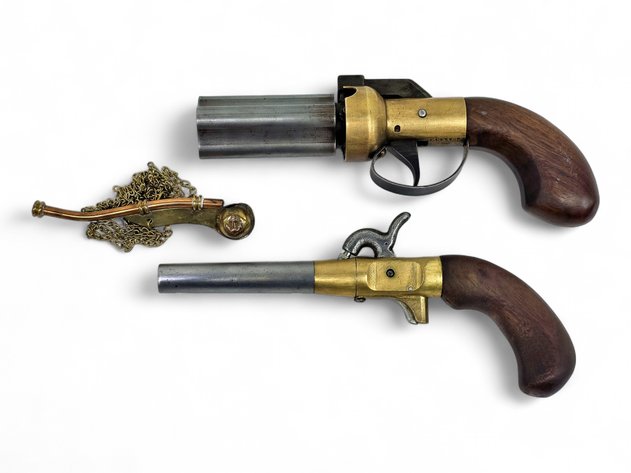
          47" Chinese Blanc de Chine Porcelain Guanyin
          Auction: Fall 2026 Premier Auction

          •   Friday, October 2, 2026 (Start)
          •   Sunday, October 11, 2026 (End)
            A monumental Chinese blanc de Chine porcelain figure of Guanyin, the bodhisattva of compassion, modeled standing in a serene frontal pose upon an elaborate dragon-and-wave pedestal. At approximately 47" high, the figure gives particular prominence to the modeled jewelry, flowing robes and densely worked pedestal. Guanyin is portrayed with downcast eyes, an urna at the forehead, and a composed expression beneath an elaborate coiffure and cowled headdress. A diminutive image of Amitabha Buddha appears within the headdress, a traditional identifying attribute of Avalokiteshvara and Guanyin. Delicately modeled strands of beaded jewelry descend across the chest, while the layered robes fall in deeply articulated, rhythmic folds. Held before the body are a small pure-water vase and a ruyi-form scepter, an auspicious emblem associated with the fulfillment of wishes. The figure rises from a densely modeled pedestal of dragons emerging amid curling waves, layered rockwork, and lotus blossoms. Articulated scales, expressive dragon heads, scrolling water, and a prominent lotus bloom at the reverse provide a dramatic visual counterpoint to the restrained serenity of the figure above. The aquatic imagery also recalls Guanyin's traditional devotional association with the protection of mariners and those in peril at sea. A lustrous off-white glaze covers the sculpture throughout, pooling subtly within the recesses and emphasizing the facial features, jewelry, cascading drapery, and complex pedestal. The figure is hollow-molded and unmarked. Likely dating to the 20th century. Measures approximately 10" W × 8" D × 47" H. Auction Estimate: $1,500–$2,000. Note Regarding Shipping Services: This item is exceptionally large and/or heavy, and may require custom boxing or crating depending on the intended destination and available carrier services. For more information prior to bidding, please email us at Shipping@AlaskaPremierAuctions.com or call/text us at 907.570.7050.
            19th C. Burmese Bronze Monastery Bell with Chinthe Oct 11

            19th C. Burmese Bronze Monastery Bell with Chinthe
            Auction: Fall 2026 Premier Auction

            •   Friday, October 2, 2026 (Start)
            •   Sunday, October 11, 2026 (End)
              A substantial 19th-century Burmese cast-bronze Buddhist monastery bell, heavily cast in the traditional clapperless form with a gently flared body, thickened lower rim, and multiple raised concentric bands. A finely modeled border of pendant lotus petals encircles the shoulder, providing a decorative transition to the elaborate figural suspension mount above. The suspension assembly incorporates two back-to-back chinthe, the guardian lions associated with Burmese Buddhist temples and royal architecture. Surrounding the lions is an arched loop formed by a pair of makaras, composite aquatic creatures found throughout Hindu and Buddhist art, their elongated bodies enriched with scales, foliate scrollwork, and open-mouthed zoomorphic heads. Their curving tails meet at the apex to form the upper finial. This distinctive combination closely parallels a larger Burmese monastery bell cast at Shwebo in 1879 and now held by The Metropolitan Museum of Art, accession no. 89.4.1466. The Met example similarly places guardian lions above a lotus-decorated shoulder beneath a suspension loop formed by paired makaras. Large bronze bells occupied an important place in Burmese Buddhist religious practice and were commonly donated to monasteries and pagodas as acts of merit. Unlike most Western bells, examples of this type were intentionally cast without internal clappers and were sounded by striking the exterior with a wooden mallet or suspended striker. The bell retains a variegated grey-brown bronze patina with lighter rubbing across the body and raised ornament. Scattered verdigris, oxidation, and accretions are present, particularly within the interior, together with numerous old scratches, abrasions, casting irregularities, and surface wear consistent with age and prolonged use. The elaborate suspension mount remains substantially intact and well defined, with minor wear and small losses to projecting details. Measures approximately 9" in diameter × 15.5" H. Auction Estimate: $1,000–$1,500.

              19th C. Italian Grand Tour Marble Orpheus, Eurydice & Hermes Relief Oct 11

              19th C. Italian Grand Tour Marble Orpheus, Eurydice & Hermes Relief
              Auction: Fall 2026 Premier Auction

              •   Friday, October 2, 2026 (Start)
              •   Sunday, October 11, 2026 (End)
                A substantial 19th-century Italian Grand Tour relief, hand-carved from a single slab of white marble and depicting Orpheus, Eurydice, and Hermes at the moment of the couple's final separation. Based upon one of the most celebrated three-figure compositions surviving from Classical antiquity, the relief arranges Hermes at left, Eurydice at center, and Orpheus at right, their restrained poses and interlocking gestures conveying the quiet pathos of the scene. Hermes, messenger of the gods and psychopompos, or guide of souls to the Underworld, appears in profile wearing a short chiton and traveler's cloak, or chlamys, with his broad-brimmed petasos suspended behind his head. He gently takes Eurydice by the wrist, preparing to lead her away. The veiled Eurydice wears a long, deeply pleated peplos and turns toward her husband, resting one hand upon his shoulder. Orpheus meets her gaze and touches her hand while carrying his lyre at his side. His peaked Thracian cap, short chiton, cloak, boots, and musical instrument identify the legendary poet and musician. The composition is traditionally understood to represent the tragic conclusion of the myth of Orpheus and Eurydice. Following Eurydice's death, Orpheus descended into the Underworld and persuaded Hades to permit her return to the living, provided that he did not look back at her during their ascent. Unable to resist, Orpheus turned toward his wife before they had reached the upper world, condemning Eurydice to return to the realm of the dead. Hermes appears to reclaim her as the couple exchanges a final, tender farewell. The scene derives from a celebrated Greek prototype created during the late 5th century BCE and preserved through several ancient marble repetitions. The best-known version is the Roman relief in the Museo Archeologico Nazionale di Napoli, inventory number 6727, discovered at Torre del Greco near Herculaneum. Other ancient versions are preserved in the Louvre and the Villa Albani in Rome. Faint Greek inscriptions naming the figures survive along the upper register of the present relief, including the name of Eurydice above the central figure. The inscription above Orpheus appears to follow the unusual retrograde arrangement found on the Naples example. These inscriptions, together with the precise arrangement, gestures, garments, and identifying attributes of the figures, demonstrate that the carving closely follows the Naples type rather than serving as a generalized neoclassical interpretation of the myth. The carving displays considerable depth through the figures' heads, limbs, overlapping hands, and layered drapery. Its perimeter retains a subtly irregular, hand-worked character, while the reverse is roughly finished with visible tool marks, staining, and accumulated deposits. Marble reductions of celebrated antiquities were produced in Italy for travelers and collectors during the Grand Tour, allowing admired works from the archaeological collections of Rome and Naples to be displayed in private interiors. The marble exhibits extensive surface weathering and mottled discoloration, with scattered deposits and accretions, localized pitting, abrasions, softened details, and minor losses along the edges and projecting elements. The reverse displays staining, residue, and areas of encrustation consistent with age and previous display. Measures approximately 15.75" W × 2" D × 20" H. Auction Estimate: $2,500–$3,500.

                Pair of Chinese Bronze Guardian Lions, Republic Period Oct 11

                Pair of Chinese Bronze Guardian Lions, Republic Period
                Auction: Fall 2026 Premier Auction

                •   Friday, October 2, 2026 (Start)
                •   Sunday, October 11, 2026 (End)
                  A substantial pair of Chinese hollow-cast bronze guardian lions dating to the Republic period, first half of the 20th century, most likely circa 1920–1940. Commonly known in the West as foo or fu dogs, the closely corresponding figures are modeled in seated poses with broad chests, powerful forelegs, and imposing proportions. Their protective iconography draws upon the longstanding Chinese tradition of guardian lions associated with the entrances of temples, palaces, official buildings, and important residences. Each lion is distinguished by a dramatically expressive face with protruding eyes beneath tightly spiraled brows, a broad flattened muzzle, flared nostrils, and a partially open mouth revealing teeth and a modeled tongue. Dense rows of deeply articulated spiral curls form the voluminous mane and continue across the neck, shoulders, and back. Long, finely incised locks descend over the chest, while the vigorously upswept tail terminates in layered, flame-like tufts. The comparatively smooth, swelling bodies provide a strong visual contrast to the concentrated concentric and linear treatment of the manes, brows, and tails. The two figures are closely corresponding rather than conventionally differentiated as male and female. Neither possesses the brocade ball or cub commonly used to identify the respective members of a traditional guardian-lion pair. They are therefore presented as complementary protective figures without assigning individual genders. The open underside of each bronze is incised with a multi-column inscription in archaistic Chinese bronze script, or jinwen, accompanied by a separate rectangular cartouche containing a pictorial emblem. The principal inscription closely follows the twenty-two-character dedication associated with the late Western Zhou ritual vessel known as the Man Gongfu Xu. The inscription may be translated approximately as: "Man Gongfu made this precious xu for sacrificial use and filial service in the ancestral temple, to seek longevity; may his sons and grandsons forever treasure and use it." Because the text expressly identifies the commissioned object as a xu, an ancient covered vessel used for ritual food offerings, its appearance on these guardian lions represents the deliberate quotation of an admired ancient bronze inscription. It is not a maker's signature, a dedication composed specifically for the lions, or evidence that the sculptures themselves date from the Western Zhou period. The appropriation of this ancient inscription places the bronzes within the broader Chinese fanggu, or "imitating antiquity," tradition. Through this longstanding antiquarian practice, the forms, ornament, and inscriptions of early ritual bronzes were studied and adapted for later works. Here, the borrowed inscription lends the guardian figures an appearance of historical authority and classical refinement characteristic of the renewed interest in ancient Chinese epigraphy that continued into the Republic period. The rectangular pictorial cartouches similarly recall the clan emblems and lineage devices encountered on Shang and early Western Zhou bronzes. Such emblems occupy a complex position between pictorial imagery and written language, and the precise reading of the devices on the present sculptures has not been established. They should not be interpreted as conventional maker’s seals or assigned a specific auspicious translation without additional epigraphic evidence. Both bronzes retain dark brown-black patination with wear commensurate with age. The undersides remain open and comparatively rough from manufacture. Each measures approximately 8" W × 10.5" D × 15" H. Auction Estimate: $800–$1,200.

                  18 Oct 11

                  18" Meiji Japanese Imari Phoenix Porcelain Charger
                  Auction: Fall 2026 Premier Auction

                  •   Friday, October 2, 2026 (Start)
                  •   Sunday, October 11, 2026 (End)
                    A large Japanese porcelain charger dating to the Meiji period (1868–1912), probably late 19th century, richly hand-painted in the traditional Imari palette of iron red, underglaze cobalt blue, green and black enamels, and gilt. Measuring approximately 18" in diameter, the charger is distinguished by its imposing scale, balanced radial composition, and extensive decoration continuing onto the reverse. Three elaborately feathered phoenixes, or hō-ō, appear within alternating iron-red and white fields filled with scrolling vines, pale paulownia foliage, and jewel-like devices. The birds are arranged rhythmically around a central blue-ground medallion containing three stylized orange foliate forms. Between them are three large black-and-green shaped reserves incorporating chrysanthemums, pinecone-like forms, and stylized auspicious objects, all framed by boldly painted black foliate borders. Six petal-shaped cartouches punctuate the rim, alternating between peony blossoms and scrolling floral ornament against green and pale-gold grounds. A narrow pale-blue diaper border encircles the edge, providing a restrained visual boundary for the otherwise densely ornamented composition. The phoenix and paulownia form a particularly established pairing in East Asian decorative art. The mythical bird traditionally conveys virtue, harmony, and auspicious rule, while the paulownia was regarded as its favored tree. Their repeated appearance gives the charger a coherent symbolic program rather than functioning simply as ornamental filler. The reverse is painted more sparingly with alternating underglaze-blue tied emblems and iron-red four-petaled florets. A sharply rendered blue lappet border surrounds the foot, and three kiln-support marks remain visible within the recessed base. The charger is otherwise unmarked. Wear commensurate with age, with possible minor firing irregularities. Measures approximately 18" diameter x 2.5" H. Auction Estimate: $300–$500.

                    18 Oct 11

                    18" Meiji Japanese Imari Dragon Porcelain Charger
                    Auction: Fall 2026 Premier Auction

                    •   Friday, October 2, 2026 (Start)
                    •   Sunday, October 11, 2026 (End)
                      A large Japanese porcelain charger dating to the Meiji period (1868–1912), probably late 19th century, densely hand-painted in iron red, underglaze cobalt blue, green, turquoise, aubergine, black, and extensive gilt. Measuring approximately 18" in diameter, the charger combines dragon imagery, auspicious symbolism, and textile-derived ornament within a complex six-part composition. The center displays a prominent gilt longevity character, commonly read as shou in Chinese and kotobuki in Japanese—reserved against iron red and enclosed by a shaped white border. Dense green-and-gold foliate scrollwork surrounds the character, followed by an unusually broad undecorated white band and a narrow pale-blue diaper border. The deliberate use of open white space gives particular emphasis to the central wish for longevity. The outer field is divided into six alternating sections. Three black-ground panels are enriched with gilt scrolling foliage and shaped cartouches containing flowers and stylized auspicious objects. The intervening panels depict overlapping folding screens, draped textiles, flowering branches, and an array of geometric brocade patterns. Sinuous dragons wind through the gilt outer fields beside these panels, appearing among stylized clouds and wave-like ornament. Chrysanthemums, peonies, honeycomb patterns, floral scrolls, and repeated gilt details fill nearly every remaining surface. The dense juxtaposition of painted screens and textile patterns is particularly characteristic of elaborate Japanese Imari decoration, in which motifs derived from costly woven fabrics were translated into porcelain. The dragons convey power and vitality, while the chrysanthemums and centrally placed longevity character reinforce the charger’s auspicious character. The reverse is also extensively decorated, with black scrolling vines enlivened by turquoise and iron-red details, alternating with large iron-red and gilt chrysanthemum heads. Concentric underglaze-blue lines define the foot and surrounding borders. The recessed underside bears an underglaze-blue six-character mark reading Da Ming Chenghua nian zhi, or “Made during the Chenghua reign of the Great Ming.” The mark is apocryphal and should be understood as an archaizing tribute mark; it does not indicate manufacture during the 15th-century Chenghua reign. A later black inventory inscription, “#137,” also appears beneath the foot. Wear commensurate with age, with possible minor firing irregularities. Measures approximately 18" diameter x 2.5" H. Auction Estimate: $400–$600.

                      19 Oct 11

                      19" Japanese Hichozan Shinpo Arita Porcelain Charger
                      Auction: Fall 2026 Premier Auction

                      •   Friday, October 2, 2026 (Start)
                      •   Sunday, October 11, 2026 (End)
                        A large, finely painted Japanese Arita porcelain charger, dating to the late Edo or early Meiji period, circa 1860–1880, and depicting Liu Bei, Guan Yu, and Zhang Fei beneath the flowering branches of a peach tree. The composition represents the celebrated Oath of the Peach Garden episode from the fourteenth-century Chinese historical novel Romance of the Three Kingdoms. Liu Bei occupies the center, seated in the elevated position of a ruler and wearing an elaborately patterned turquoise robe above a brown-and-gold apron decorated with cloud forms. At left, Guan Yu is distinguished by his exceptionally long beard and dignified bearing, while Zhang Fei stands at right with a bristling beard, animated expression, and richly patterned iron-red garments. Both warriors are represented with swords, emphasizing their martial identities. The meticulously rendered costumes incorporate cloud scrolls, floral ornament, geometric borders, auspicious roundels, and gilt detailing, while the faces, hair, hands, and layered textiles display remarkably precise brushwork. Gnarled peach branches laden with pink blossoms extend across the upper field, framing the three figures against a pale bluish-white ground. Carefully painted rockwork anchors the composition below. The extensive open ground provides an effective visual counterpoint to the intricately decorated garments, giving the figures unusual clarity and monumentality while allowing the expansive porcelain surface to function almost as a painted narrative composition. According to the literary narrative, Liu Bei, Guan Yu, and Zhang Fei gathered in a peach garden and pledged themselves as sworn brothers, united by loyalty and their determination to restore order during the declining years of the Eastern Han dynasty. Although the formal peach-garden oath is a literary episode rather than a securely documented historical event, it became one of East Asia’s most enduring emblems of brotherhood, fidelity, courage, and righteousness. The story enjoyed widespread popularity in Japan from the Edo period onward and appeared across painting, woodblock prints, metalwork, and ceramics. The reverse is decorated with a continuous flowering vine rendered in underglaze cobalt blue, iron-red enamel, and gilt, enclosed by concentric blue borders. Within the foot is a six-character iron-red mark reading Hichōzan Shinpō sei, translated as “Made by Hichōzan Shinpō.” Hichōzan Shinpō was a commercial name employed by the prominent Arita porcelain merchant Tashiro Monzaemon during the late Edo and Meiji periods. The concern produced and marketed finely decorated porcelain, much of it intended for export. The Hichōzan Shinpō inscription is consequently a meaningful period maker’s mark associated with nineteenth-century Japanese porcelain production rather than a decorative or apocryphal inscription. The mark, painting style, porcelain body, and reverse decoration collectively support a late Edo to early Meiji attribution, approximately 1860–1880. Some gilding loss to the rim and wear commensurate with age. Measures approximately 19" in diameter x 2.75" H. Auction Estimate: $800–$1,200.

                        Chinese Famille Rose Boys at Play Vase, Probably Late Qing Oct 11

                        Chinese Famille Rose Boys at Play Vase, Probably Late Qing
                        Auction: Fall 2026 Premier Auction

                        •   Friday, October 2, 2026 (Start)
                        •   Sunday, October 11, 2026 (End)
                          A large Chinese famille rose porcelain vase, probably late Qing dynasty, of rounded baluster form with a tall, gently waisted neck and flaring mouth, painted in polychrome enamels with boys engaged in festive pursuits within a garden landscape. The figural decoration extends around the body, interspersed with leafy trees, ornamental rockwork, butterflies, and sections of garden fencing. Boys carrying banners and a gong animate the composition, while a pavilion with a tiled roof, slender columns, and patterned floor anchors the architectural setting. Generous passages of white ground distinguish the comparatively open landscape from the densely ornamented neck. Against a vibrant yellow ground, the neck displays fruiting peach branches, flowering sprays, and bats surrounding shaped white reserves filled with auspicious objects. A collar of pendant ruyi heads defines the shoulder, complemented by floral borders on dark blue grounds at the mouth and lower body. A further polychrome band follows the interior rim. The children, peaches, and bats express traditional wishes for flourishing descendants, longevity, and good fortune. The recessed base bears the six-character iron-red seal mark, translating as “Made during the Qianlong reign of the Great Qing.” The mark is considered apocryphal and does not establish manufacture during the Qianlong reign. Accompanied by a Hong Kong Art Group Certificate of Identity dated August 30, 1979, incorporating a photograph corresponding to the vase. The certificate states that the vase was more than one hundred years old when issued; this historical age opinion has not been independently verified. Condition includes scattered surface wear, small firing imperfections, and discoloration to the exposed foot. Measures approximately 11" in diameter x 22" tall. Auction Estimate: $800–$1,200. Note Regarding Shipping Services: This item is exceptionally large and/or heavy, and may require custom boxing or crating depending on the intended destination and available carrier services. For more information prior to bidding, please email us at Shipping@AlaskaPremierAuctions.com or call/text us at 907.570.7050.
                          Meiji Japanese Satsuma Figural Bowl, Kozan Mark Oct 11

                          Meiji Japanese Satsuma Figural Bowl, Kozan Mark
                          Auction: Fall 2026 Premier Auction

                          •   Friday, October 2, 2026 (Start)
                          •   Sunday, October 11, 2026 (End)
                            A Japanese Satsuma earthenware bowl of the Meiji period, late nineteenth or early twentieth century, finely decorated in polychrome enamels and gilding with a gathering of men, women, and children. Its rounded sides rise from a short circular foot, with decoration extending across the interior and exterior. The interior scene includes seated, kneeling, and standing figures attending to boxes and other objects. Their robes are individually patterned with floral sprays, geometric ornament, and contrasting panels of color. Fine outlines articulate the faces, coiffures, and garments, while closely applied gold stippling enriches the surrounding ground. A broad ornamental border frames the scene, combining floral panels, minute geometric patterns, and oval reserves within a complex arrangement of gilt divisions. The exterior carries birds, flowers, and foliage beneath additional patterned bands, continuing the bowl’s detailed decoration beyond its principal figural composition. The underside bears a mark read as Kozan, painted in gold within a black cartouche outlined in gilt. The cream-colored glaze exhibits the fine crackle associated with Satsuma earthenware. The precise workshop identity is not established by the signature alone. Light wear to the gilding, localized discoloration within the glaze crackle, and minor surface marks are present. Measures approximately 6" in diameter x 2.25" tall. Auction Estimate: $800–$1,200.

                            Late Ming Chinese Blue & White Chilong Dragon Bowl Oct 11

                            Late Ming Chinese Blue & White Chilong Dragon Bowl
                            Auction: Fall 2026 Premier Auction

                            •   Friday, October 2, 2026 (Start)
                            •   Sunday, October 11, 2026 (End)
                              A Chinese blue and white porcelain bowl of the late Ming dynasty, late sixteenth to early seventeenth century, painted in underglaze cobalt with stylized chilong dragons. The deep, rounded sides rise from a short circular foot to a slightly everted rim, the porcelain covered with a pale, blue-tinted glaze. Two elongated dragons extend around the exterior, their forward-projecting heads, arched bodies, and bifurcated tails resolved into sweeping, scroll-like forms. Fine parallel strokes articulate the heads, contrasting with broader passages of cobalt defining the bodies and curling appendages. Small stylized sprays and ornamental devices occupy the intervening spaces. Variations in pigment intensity and the freely drawn contours give the decoration a distinctly calligraphic character. A further stylized dragon fills the interior well within a double circle, with narrow blue lines encircling the inner rim and lower exterior. The fanciful treatment of the dragons, particularly their branching tails and abbreviated anatomy, distinguishes the design from more naturalistically rendered, scaled dragons. The recessed, glazed base is unmarked and enclosed by an exposed foot ring with an uneven, granular surface, brown discoloration, and small firing imperfections. Condition includes rim fritting and scattered shallow chips, small losses and wear to the foot ring, surface abrasions, and isolated dark kiln specks. Irregularities in the potting and glaze are visible throughout. Measures approximately 5.75" in diameter x 2.75" tall. Auction Estimate: $150–$250.

                              Late Qing Chinese Famille Rose Qilin Songzi Jar Oct 11

                              Late Qing Chinese Famille Rose Qilin Songzi Jar
                              Auction: Fall 2026 Premier Auction

                              •   Friday, October 2, 2026 (Start)
                              •   Sunday, October 11, 2026 (End)
                                A late Qing Chinese famille rose porcelain jar, circa 1880–1900, painted with a procession illustrating Qilin Songzi, or “Qilin Sends a Son.” A boy in a bright orange coat rides a scaly purple-and-black qilin, accompanied by attendants carrying a ceremonial parasol, fans and a tray holding a book or scholar’s box. The scene continues around the broad ovoid body, with sparse green foliage and lightly drawn ground lines setting the figures against the white porcelain. The high shoulders rise to a short neck decorated with floral panels above a continuous iron-red-and-white diaper band. Contrasting enamel colors distinguish the figures and their patterned garments, while the procession’s varied gestures carry the narrative around the vessel. Qilin Songzi expresses the traditional wish for a son destined for scholarly achievement and distinction. The auspicious creature, ceremonial parasol and literary attribute give this domestic vessel a celebratory subject. Measures approximately 8.5" in diameter × 10" high. Auction Estimate: $400–$600.

                                Chinese Blue & White Phoenix Bowl, Attributed 17th C. Oct 11

                                Chinese Blue & White Phoenix Bowl, Attributed 17th C.
                                Auction: Fall 2026 Premier Auction

                                •   Friday, October 2, 2026 (Start)
                                •   Sunday, October 11, 2026 (End)
                                  A Chinese blue and white porcelain bowl, attributed to the late Ming to early Qing period, seventeenth century, of deep rounded form with steeply rising sides and a substantial circular foot, freely painted in underglaze cobalt with a phoenix and flowering stems. The phoenix turns its crested head above a compact body, its wings and elongated tail feathers sweeping across the exterior. Broad, saturated strokes establish the bird’s silhouette, contrasted with finer parallel lines defining the breast and plumage. A large stylized blossom occupies the opposite side, with rounded, shaded petals above a curving stem and spreading leaves. Smaller buds, leafy sprays, and loosely drawn ornamental devices complete the decoration. A single cobalt line encircles the lower body above the foot. The largely undecorated interior preserves an open field of pale grey-blue glaze, contrasting with the animated exterior painting. Variations in pigment density, softly diffused outlines, and irregularities in the potting contribute to the bowl’s informal provincial character. The recessed glazed base bears a small, freely brushed underglaze-blue character mark, the precise reading of which remains undetermined. The exposed foot ring is coarse and uneven, with granular accretions, brown discoloration, and scattered small losses. Dark inclusions and localized glaze pits occur across the base and body. Condition includes rim wear and fritting, small edge losses, surface scratches, and scattered glaze imperfections. Measures approximately 6.25" in diameter x 3.5" tall. Auction Estimate: $150–$250.

                                  Two Japanese Porcelain Sake Dispensers, Early 20th C. Oct 11

                                  Two Japanese Porcelain Sake Dispensers, Early 20th C.
                                  Auction: Fall 2026 Premier Auction

                                  •   Friday, October 2, 2026 (Start)
                                  •   Sunday, October 11, 2026 (End)
                                    Two Japanese porcelain sake dispensers, early twentieth century, modeled as barrel-shaped vessels with raised bindings imitating the ropes and straw coverings of traditional wooden sake casks. Each has a filling aperture above and a dispensing opening near the base, with contrasting floral and landscape decoration incorporating prominent commercial inscriptions. The floral example has a cylindrical body, rounded shoulder, and thick, diagonally modeled rope bands. Pink chrysanthemums and green foliage surround a gilt-outlined circular reserve bearing the sake name Matsuragiku, repeated in smaller phonetic characters below. Additional inscriptions include “registered trademark” and a three-shō capacity designation across the shoulder. The Matsuragiku name is associated with Miyajima brewery in Karatsu, founded in 1926, supporting a late Taishō or early Shōwa attribution for this vessel. A wire bail handle remains attached to the shoulder lugs, and a cork closes the lower outlet. The companion has a broader, gently rounded body with molded vertical bindings, horizontal rope borders, and a finely ridged upper surface. Bold cobalt calligraphy dominates the front above a landscape of mountains and sailing boats on blue-lined water, accompanied by smaller iron-red inscriptions. Further commercial lettering appears on the reverse. Pierced shoulder lugs remain, although the carrying handle is absent. The combination of brewery or merchant lettering, decorative imagery, and practical dispensing apertures reflects their role as commercial sake containers. Both have recessed glazed bases bearing blue marks within geometric frames, together with later applied felt pads. Condition includes surface wear, scattered staining and deposits, firing irregularities, and chips and losses to the foot rims. The surviving metal handle exhibits oxidation. Upper closures are absent, and the landscape example also lacks its carrying handle and lower stopper or dispensing fitting. Largest measures approximately 10" in diameter x 10.5" tall. Auction Estimate: $200–$300.

                                    Late Qing–Republic Chinese Blue & White Horse Vase Oct 11

                                    Late Qing–Republic Chinese Blue & White Horse Vase
                                    Auction: Fall 2026 Premier Auction

                                    •   Friday, October 2, 2026 (Start)
                                    •   Sunday, October 11, 2026 (End)
                                      A Chinese blue and white porcelain vase of archaistic hu form, late Qing to early Republic period, circa 1890–1920, painted with horses in a rocky landscape beneath a spreading willow. The rounded shoulders taper toward a slightly spreading foot, while the waisted neck rises to a broad, flaring mouth fitted with a narrow metal collar. Two applied tubular handles flank the neck, their molded horizontal ribs accented with cobalt bands. The principal composition brings together a pale horse with its head raised and a darker horse stepping beneath the willow’s angular trunk and pendant foliage. A spotted animal continues the scene around the adjoining side. Layered rock formations, low vegetation, and small trees extend across the lower body, leaving a broad expanse of undecorated glaze at the rear. Dark outlines and closely worked details distinguish the animals’ manes and features, while overlapping blue washes lend depth to the rocks and landscape. The vase combines a form derived from ancient Chinese bronze vessels with freely arranged animal painting. Its broad shoulder provides space for the principal scene, and the willow extends upward onto the neck, connecting the decoration across the vessel’s changing profile. The recessed glazed base bears a six-character Yongzheng seal mark in underglaze blue, translating to “Made during the Yongzheng reign of the Great Qing.” The mark is considered apocryphal, referring to the earlier reign rather than establishing the vase’s production date. Surface wear commensurate with age, with scattered kiln specks and glaze irregularities. Measures approximately 10" in diameter x 13.25" tall. Auction Estimate: $300–$500.

                                      Late Qing Chinese Blue & White Double Happiness Porcelain Jar Oct 11

                                      Late Qing Chinese Blue & White Double Happiness Porcelain Jar
                                      Auction: Fall 2026 Premier Auction

                                      •   Friday, October 2, 2026 (Start)
                                      •   Sunday, October 11, 2026 (End)
                                        A Chinese blue and white porcelain covered jar, late Qing dynasty, circa 1880–1910, of tall baluster form with broad, rounded shoulders tapering to a gently spreading foot, surmounted by a domed cover with a rounded button finial. The body is painted in underglaze cobalt blue with prominent double happiness characters surrounded by an extensive network of flowering scrolls. Large, stylized blossoms punctuate the densely intertwined stems and curling leaves, their petals articulated with fine blue lines and shaded washes. The saturated cobalt of the characters provides a strong focal point against the more delicately drawn floral ground. A continuous key-fret border encircles the shoulder immediately below the mouth. The cover repeats the double happiness characters among flowering scrolls, with radiating petal decoration across the finial. Its rounded profile continues the broad sweep of the shoulders, giving the assembled vessel a unified silhouette. The double happiness emblem (shuangxi) combines two characters for happiness and is closely associated with marriage and wishes for a harmonious union. Its repeated appearance places the jar within the Chinese tradition of auspicious household ceramics associated with wedding celebrations and gifts. The recessed, glazed base bears a freely written four-character Chenghua mark, meaning “Made during the Chenghua reign.” The mark refers to the Ming emperor’s reign of 1465–1487 and is apocryphal on this later vessel. Scattered wear commensurate with age. Measures approximately 10" in diameter x 16" tall, including the cover. Auction Estimate: $300–$500. Note Regarding Shipping Services: This item is exceptionally large and/or heavy, and may require custom boxing or crating depending on the intended destination and available carrier services. For more information prior to bidding, please email us at Shipping@AlaskaPremierAuctions.com or call/text us at 907.570.7050.

                                        24 Oct 11

                                        24" Meiji Japanese Sky-Blue Cloisonné Iris & Swallow Vase
                                        Auction: Fall 2026 Premier Auction

                                        •   Friday, October 2, 2026 (Start)
                                        •   Sunday, October 11, 2026 (End)
                                          A monumental Japanese cloisonné enamel vase of the late Meiji period, circa 1890–1910, decorated with flowering irises and swallows in flight against an expansive sky-blue ground. Standing two feet tall, the vase gives an intimate study of birds and flowers an unusually commanding presence. Its elongated ovoid body rises through high, rounded shoulders to a short waisted neck and gently flared mouth. Tall stems and overlapping, sword-shaped leaves support open blossoms and furled buds in violet, cobalt blue, lavender, and creamy white. The petals display carefully graduated shading, with pale edges, darker folds, and yellow accents lending depth to the flowers. Fine metal wires trace the undulating petal margins and delicate veins, while smaller yellow blossoms and broad leaves shaded in green and reddish brown enrich the planting below. Swallows sweep across the upper body in varied attitudes, their pointed wings and deeply forked tails conveying movement above the upright flowers. Closely arranged wirework delineates individual feathers, contrasting dark wings and backs with pale breasts and reddish facial markings. Broad passages of uninterrupted blue separate the birds from the floral groups, allowing the composition to unfold as the vase is viewed from different sides. The decoration draws on the Japanese tradition of bird-and-flower imagery, balancing closely observed natural forms with a carefully arranged composition. Soft transitions between enamel colors give the irises the delicacy of a painted floral study, while the sharply defined wings introduce a lively contrast. The combination of shaded enamels, fine wirework, and an open ground reflects the pictorial refinement achieved by Japanese enamelers during the later Meiji period. Metal mounts encircle the mouth and foot, with a narrow scalloped ornamental border beneath the upper rim. The inner neck is finished in green enamel, and the underside is darkly patinated. No maker’s mark is visible on the base. The exterior retains a glossy surface with scattered minor marks. The metal mounts and underside show tarnishing and discoloration, with patchy wear and pale marks visible inside the neck. The vase measures approximately 10.5" in diameter at its widest point × 24" high. Auction Estimate: $1,500–$2,500. Note Regarding Shipping Services: This item is exceptionally large and/or heavy, and may require custom boxing or crating depending on the intended destination and available carrier services. For more information prior to bidding, please email us at Shipping@AlaskaPremierAuctions.com or call/text us at 907.570.7050.
                                          How To Register & Bid

                                          Online Bidding Options

                                          AK Auctions Online Bidding Options

                                          Discover new auctions under the Auctions tab or visit our bidding platform directly at: bid.AlaskaPremierAuctions.com

                                          Download our mobile bidding app for iOS and Android devices. Bid online from anywhere and stay updated on the latest auctions!

                                          Download AK Auctions on The App Store

                                          Download AK Auctions on Google Play

                                          Upcoming Auctions